-->

In Limbo: A Conversation on Seeking Asylum in WA - Join us on 22nd April 2026

You're invited to join us for an evening of conversation and connection about the experiences of people seeking humanitarian protection in WA. This panel discussion brings together four experts from across WA's humanitarian sector spanning from lived experience, migration law, grassroots advocacy, and government, to speak openly about the asylum seeker and refugee experience in our state.

Date: Wednesday 22 April

Time: 5:30pm

Where: University Club of Western Australia

Bring a friend and join us for what promises to be an insightful and meaningful night. Seats are free for CARAD members and a suggested $10 donation for others - please note that RSVPs are essential.

The evening's panelists will include:

Betty McGeever is a retired public librarian and longtime activist for refugees and asylum seekers, at many levels, solo and in advocacy groups. Betty has supported individuals in WA and has been involved in resettling those previously held in Nauru to freedom and citizenship in Canada via the Canadian community resettlement scheme. I

Ehsan Nazamyar is originally from Afghanistan. He and his family (his wife and their son at the time) arrived in Australia in 2011. Due to unsafe conditions in his home country, Ehsan spent most of his life outside Afghanistan as an asylum seeker and refugee. Ehsan currently works at CARAD as a case worker. Through his work and service to the community, Ehsan hopes to continue contributing to a more inclusive and compassionate society.

Janine Freeman, is a social equity advocate and former WA Member of Parliament. Having represented the most multicultural electorate in Western Australia, Janine was privileged to work with and advocate for people from diverse, ethnic, faith, language, and cultural backgrounds. Janine now pursues her passion for advocacy volunteering for various not for profit organisations and works as a non-executive director at GESB Super, Water Corporation, National Museum of Australia and Anglicare.

Teresa Lee has over a decade of experience working alongside people seeking asylum in Australia. She began her career as a social worker and later practised in refugee law, supporting individuals and communities to navigate complex barriers to seeking asylum. Teresa has extensive experience in systemic advocacy, promoting fairer policies and pathways to permanent protection. She now works as a caseworker at CARAD, bringing in-depth legislative knowledge and a trauma-informed approach to her work.

We look forward to seeing you there!

RSVPs are required. Please reserve your seat here! GiveNow - In Limbo: A Conversation on Seeking Asylum in WA

Please reach out to office@carad.org.au with any questions.

Opening Doors Program Continues Making Impacts

Through our Opening Doors program, CARAD provides personalised assistance in education, literacy, English language training and employment coaching. The one-on-one, trauma-informed support helps refugees and people seeking asylum navigate life in Western Australia.

Our clients face significant barriers including educational gaps from displacement, unrecognised foreign qualifications, unfamiliar employment systems, limited English proficiency and social isolation due to language and cultural differences - challenges intensified by trauma, discrimination and lack of support networks. Since 2015, the Opening Doors Program has helped build foundational skills and confidence to break cycles of disadvantage.


The Opening Doors Coordinator, Indra Croasdale, shares some insights about CARAD’s largest growing program.


1. What does a typical journey look like for someone who comes through the Opening Doors Program?


A typical journey begins with understanding the person’s immediate needs — educational gaps, employment barriers, and social isolation, as well as recognising their strengths and understanding what has worked well in the past. We then match them with committed volunteers who provide mentorship and advocacy.

From there, we provide support, continuously exploring the best available options that meet clients where they are at.  Clients' needs commonly change, so does the support offered. We have the most amazing volunteers who meet weekly with the client and together work on agreed goals. It is a process that requires creativity, open-mindedness, but more than anything - kindness.

We provide homework and education support, employability preparation — resume development, interview skills, and explore pathways into training or work. Throughout the process, we encourage social engagement to rebuild confidence and belonging. The journey is about moving from instability to independence.


2. What has been the most significant impact of the Opening Doors Program?


The most significant impact is restoring dignity and hope. Many of the people we support face systemic barriers: language challenges, learning gaps, limited recognition of qualifications, trauma, unemployment, and social isolation.

The Opening Doors program provides not just practical support, but relational support. It rebuilds confidence, reconnects people to opportunity, and creates a pathway forward. We don’t just help people to reach their goals or access services — we help them rebuild their lives.


3. What does success look like for someone who has gone through the Opening Doors Program?


It might mean securing employment, completing education, improving language skills, or confidently participating in community life. However, success is not always measured by visible change in education or employment but by consistent engagement and trust. Even when outcomes remain the same, meaningful human connection strengthens dignity, confidence and sense of belonging.  

Success is when someone no longer sees themselves as a recipient of support, but as a contributor — someone who feels confident, capable, and connected.


4. Is there a client story that stands out as especially transformative?


One client's story stands out as especially transformative. An asylum seeker from Afghanistan arrived in Australia on the last boat permitted to stay and was determined to rebuild his life.

He reached out to CARAD requesting support to improve his English. He was linked with an Opening Doors volunteer who continued supporting him over several years. A couple of years later, he was offered a scholarship with Curtin University. As a result, he lost access to income support payments. He then had to work and study full-time, but never gave up, and neither did we. He completed his studies and practical training, eventually securing a role with the same firm he trained at. In that role, he successfully helped other refugees obtain permanent residency, even while he himself remained on a temporary visa. Recently, he finally gained permanent residency, and soon after, his Australian citizenship was approved.

His journey from a newly arrived asylum seeker to a practising lawyer and citizen—advocating for others in the same position he once faced—reflects extraordinary resilience and impact.


5. What’s one moment that highlighted why this work matters?


A participant once said, “After arriving in Australia, I knew my children were safe. But we had so many challenges to overcome that at times I wondered if we would ever feel settled.  Your support gives me hope. For the first time since arriving, I feel my family belongs here” It reminded me that beyond employment and education, this work is about restoring hope and a sense of belonging.


6. What do you learn from the people you work with?


I learn resilience. I witness displacement, uncertainty, and loss — yet the people that I meet remain determined.  Their perseverance reinforces the importance of support combined with a genuine human connection.


7. What would you like the community to understand about people seeking asylum and refugees in this program?


I would like people to understand that asylum seekers and refugees bring skills, experience, and ambition. The barriers they face are systemic, and it has nothing to do with lack of motivation or ability. With the right support and opportunity, they contribute meaningfully to society.

I would like us all to remind ourselves that we all just people, trying to do our best to protect our loved ones and live life with dignity.


8. What are the biggest needs you’re seeing right now?


The biggest needs are access to sustainable employment, learning support for people who have limited prior formal learning, and social connectivity. There is also an increasing need for trauma-informed support and consistent mentorship.


9. How can the community better support the Opening Doors Program and the people it serves?


The community can support by volunteering time, offering work placements, recognising international experience, and creating inclusive spaces. Advocacy makes a huge difference — challenging misconceptions and promoting understanding can significantly reduce social barriers.


10. What’s the most rewarding part of coordinating this program?


The most rewarding part is getting to know our amazing clients, being part of their journey and witnessing transformation — seeing someone arrive feeling uncertain and leave feeling empowered. Watching confidence grow, networks expand, and opportunities open up makes the work deeply meaningful.

CARAD celebrates International Women's Day 2026

For International Women’s Day 2026, UN Women Australia announced the theme “Balance the Scales” and what better way to honour this than celebrate CARAD’s inspiring clients! This year’s theme spotlights that every woman and girl should be safe, heard, and free to lead her own future by dismantling those current unjust systems and barriers women still face. 


Women seeking asylum in Australia face unique and often overlooked challenges, with current policies and structural barriers having a disproportionate impact on them. With 145,000 refugees and people seeking asylum in Australia in 2025, women comprised approximately half of this population.[1] People seeking asylum are often not afforded the same respect or rights to work, healthcare, and education – and women on top of this face extra hurdles such as disproportionate caretaking responsibilities, household workload, gender-based violence and women’s health conditions. To learn more specifically about the experience of healthcare for women seeking asylum, see Is reproductive healthcare failing newly arrived refugee women?


CARAD recognises and celebrates all women seeking asylum and their inspiring resilience. Hand in hand, CARAD also recognises the incredible women in our network that support and uplift one another.

“On behalf of my family and myself, I would like to sincerely thank you for the valuable support you have provided us. Your help during our difficult times has been a great source of strength, both financially and emotionally. Especially the assistance that allowed us to meet our baby’s needs will always hold a very special place in our lives. The sincerity, dedication, and care you have shown in your services made us feel that we are not alone. For us, it was not only a form of help, but also a source of hope. We are truly grateful to your entire team for their efforts.

Your support means so much to us and will always be remembered with gratitude.”

CARAD Client

[1] Australia | UNHCR. For more detailed statistics on people seeking asylum in Australia see Asylum statistics in Australia - Refugee Council of Australia.

Run with Purpose : Join CARAD's 2026 HBF Run for a Reason Team!

CARAD is proud to be part of the 2026 HBF Run for a Reason and we’re inviting you - our community, our supporters, our friends, to run, jog, or walk alongside us on Sunday 24 May 2026 starting in City of Perth!

What is the HBF Run for a Reason?

The HBF Run for a Reason is one of Western Australia's most beloved community events — a chance for people of all fitness levels to come together, move their bodies, and raise vital funds for causes close to their hearts. Whether you're a seasoned runner or someone who hasn't laced up in years, there's a place for you at the starting line.

This year, CARAD will be part of this amazing event because we believe that the act of showing up physically, in community, together, mirrors what we try to do for our clients every single day.

The Impacts of Your Steps

Does participating in a fun run actually make a difference? The answer is yes!

Every dollar raised through the HBF Run for a Reason helps CARAD fund essential services like our food pantry, rental relief and healthcare assistance; mentorship and education programs; crisis accommodation and advocacy.

For people navigating the asylum process, access to quality casework support or social inclusion programs isn't a small thing - it can be the difference between feeling hopeless about their future and rebuilding their life in safety. Your fundraising helps make that possible.

How to Get Involved

Signing up is easy, and every level of participation counts. Here's how to join us:

1. Sign up for the HBF Run for a Reason

Head to CARAD’s HBF Run for a Reason website (linked HERE) and register. Choose your distance — whether it's 4km, 12km, or somewhere in between!

2. Set up your fundraising page

Once registered, you'll have your own personal fundraising page. Share it with your friends, family, and colleagues. Tell them why you're running and what CARAD means to you. People give generously when they understand the why.

3. Spread the word

Share on social media. Tell a colleague over coffee. Post in your community group. The more people who hear about what we're doing, the greater the impact we can make together.

4. Can't run? You can still help

Not able to participate on the day? You can still donate to a CARAD team member's fundraising pag, or volunteer your support in other ways. Reach out to us - we'd love to have you involved.

Person Seeking Asylum Exposed to Torture in Immigration Detention

The UN Committee against Torture (CAT) is a body of the United Nations that holds States accountable for human rights violations. It recently found that Australia failed to protect an Iranian asylum seeker from torture and ill-treatment during his years-long detention. The man had arrived on Christmas Island by boat in 2013 and was first sent to Manus Island in Papua New Guinea in offshore processing, and later detained in mainland Australia. He filed a complaint with CAT, reporting he was held in difficult conditions and subjected to violence, including an extremely serious attack by a security guard.

He was brought to Australia in 2019 for medical care but remained in immigration detention for nearly three years before being released into the community in 2022. This week, CAT concluded that Australia violated its international legal obligations by exposing him to torture in detention. It further recalled its longstanding concerns about Australia’s offshore processing policy, which has repeatedly exposed people seeking asylum to prolonged detention, uncertainty and conditions causing severe physical and mental suffering.

CARAD welcomes CAT’s findings and its call on the Australian government to provide the complainant with full redress, including compensation and rehabilitation, to afford him an opportunity to have his protection claims examined, and to adopt guarantees of non-repetition to prevent similar violations in the future.

Nauru Human Rights Review

On January 20, 2026, the UN Human Rights Council will review Nauru's human rights record in Geneva. This is the fourth such review (previous reviews occurred in 2011, 2015, and 2021).

The review examines reports from Nauru's government, UN human rights experts, and civil society groups. Countries are expected to report on their progress implementing previous recommendations and describe recent human rights developments.

The review conclusions will be adopted on January 30, 2026. To read more about the review follow: Nauru’s human rights record to be examined by Universal Periodic Review | OHCHR

CARAD welcomes the review and holds significant concerns regarding the recent deportations to Nauru under Australia’s secret offshore deal.

CARAD Fundraiser THIS Saturday!

Some of our wonderful supporters are hosting a CARAD fundraiser this Saturday and we’d love for you to join!

Come support Los Removalists’ single launch at Amplifier Bar, 10th January at 7:30pm and help provide food security and hygiene items for individuals and families seeking asylum in Western Australia. Your attendance not only supports a compassionate punk band but also provides life-changing support to those who are fleeing violence and persecution.

Learn more and purchase tickets here:

Los Removalists - Kingdom Single Launch Tickets, Sat, Jan 10, 2026 at 7:30 PM | Eventbrite

See you there!

We are hiring!

We are excited to announce there is a new position becoming available at CARAD: We are recruiting a new Office Manager in a full-time position.

Join our team to make a difference in supporting some of the most vulnerable people in our community.

In this role, you will be responsible for designing, implementing, and managing administrative systems and processes.

To read more about it and apply, please visit EthicalJobs.

We look forward to reading your application.

Happy New Year!

Human Rights Day 2025

CARAD was privileged to be invited to speak at last week's Human Rights Day event hosted by the United Nations Association of Australia (WA) and Amnesty International UWA.

Our colleague Ehsan Nazamyar generously shared his personal journey - from his early life in Afghanistan, through conflict and displacement, to finding a new beginning in Australia. It was a meaningful opportunity to speak openly about the experiences that drive our work and the profound fulfilment that comes from supporting CARAD clients seeking asylum in WA.

We were grateful to share the panel with Dr. Barbara Nattabi, Dr Fiona McGaughey, Gracia Mukiibi and our own Catherine Green, CARAD's Deputy Chairperson. The conversations highlighted the crucial role that empathy and understanding play in building inclusive communities here in WA.

Thank you to the organisers, volunteers, and everyone who attended - CARAD is grateful to have been part of such an important evening.

To request a CARAD representative to present at your next event please reach out to Office@carad.org.au .

Join CARAD's Legacy Circle

Leaving a gift in your Will is a generous way you can support the Centre for Asylum Seekers, Refugees and Detainees (CARAD) and the work it does. The power of a legacy gift to CARAD enables your values, your kindness and your belief in human dignity to continue long into the future, touching the lives of those seeking asylum who you may never meet but whose futures you've helped transform.

When you include a gift to CARAD in your Will, you're creating a lasting legacy of compassion that helps people seeking asylum in Western Australia access the support they need most.

Learn how your legacy could make a difference for generations to come in the information pack below.

CARAD Meets with United Nations Working Group

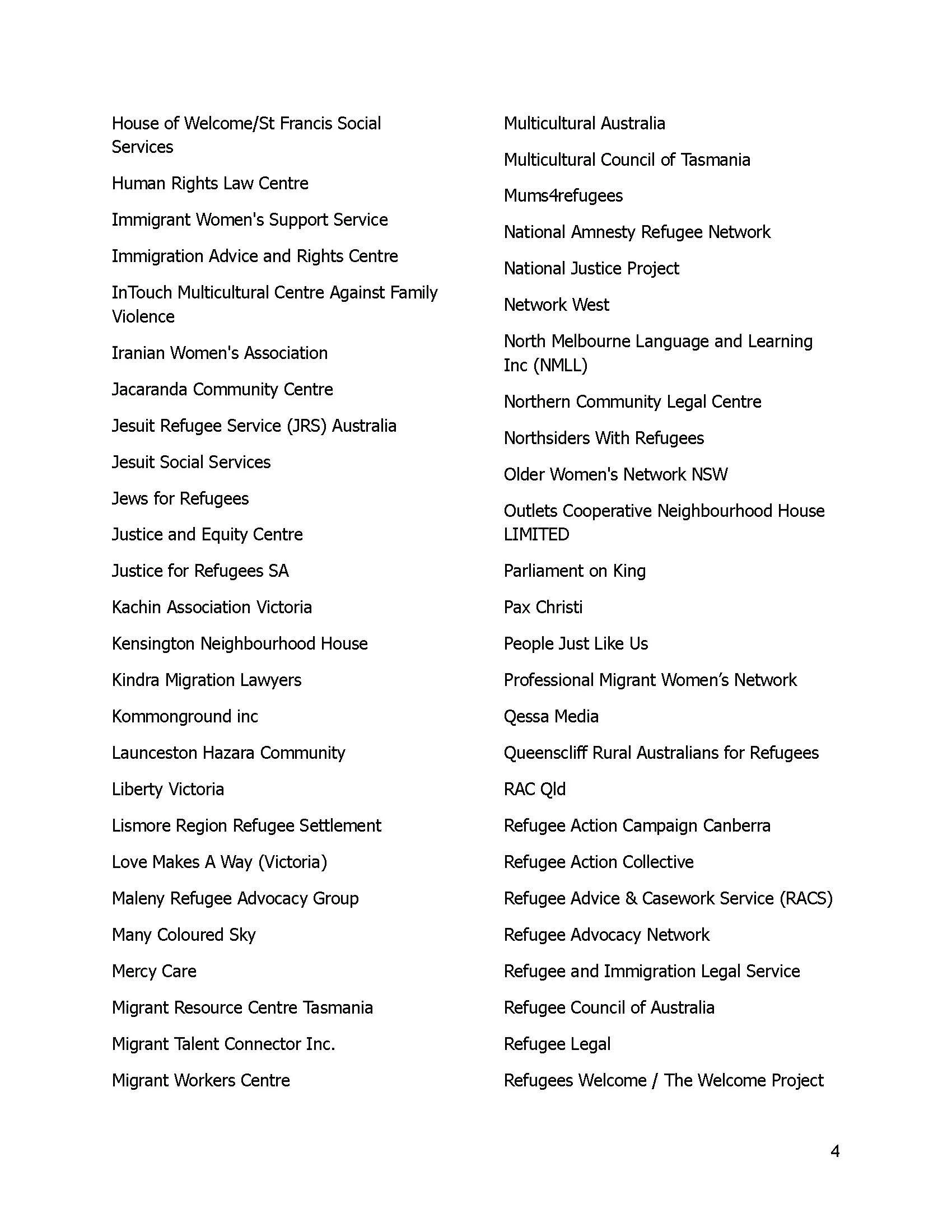
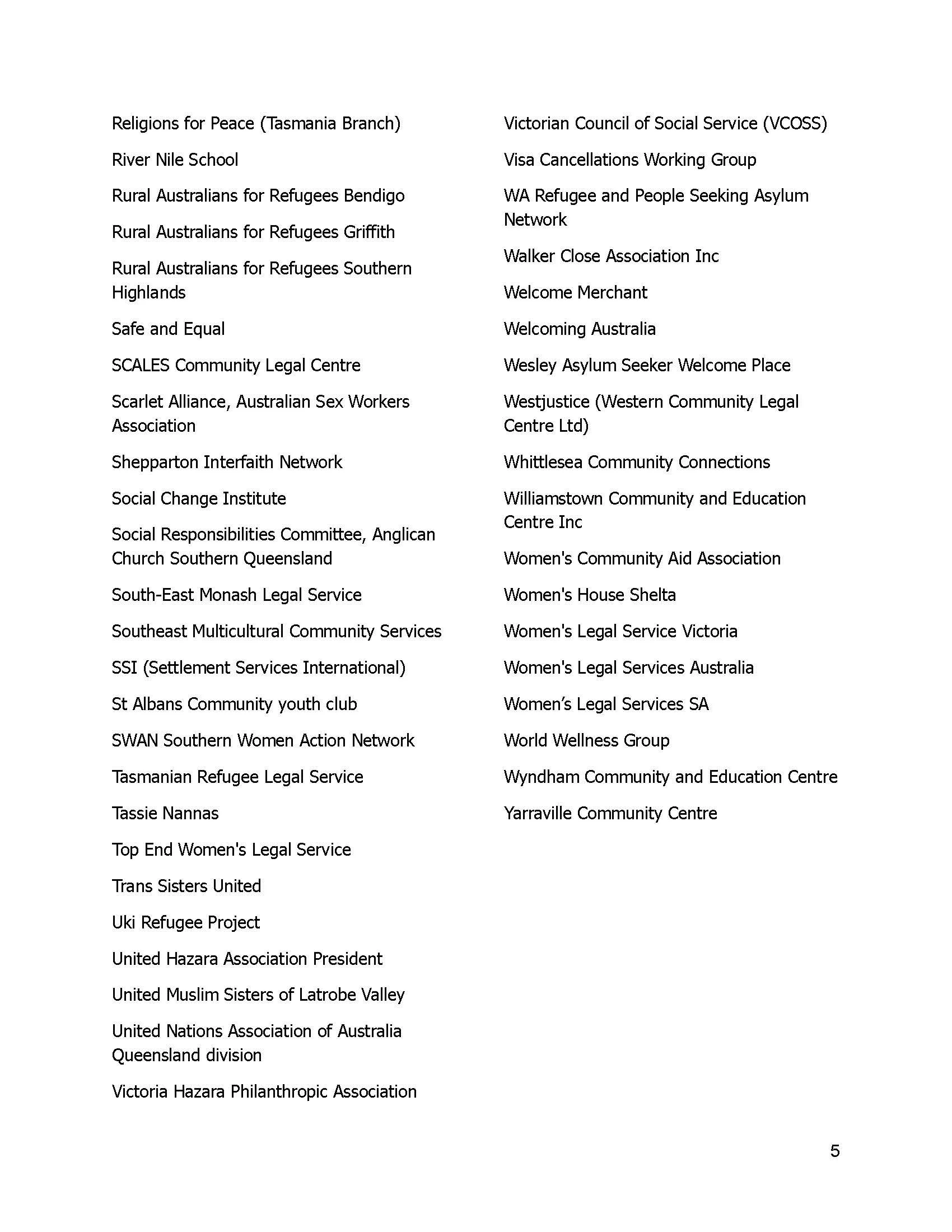
CARAD was deeply honoured to welcome the United Nations Working Group on Arbitrary Detention during their 12-day visit to Australia last week. Our discussions focused on critical concerns affecting clients in Western Australia's immigration detention facilities, including degrading treatment, inadequate healthcare, the use of physical and chemical restraints, deportations, and third-country transfers to Nauru. We affirmed our support for the recommendations in 'Immigration Detention in Australia: Civil Society Submission to the United Nations Working Group on Arbitrary Detention', and our colleagues Associate Professor Mary Anne Kenny and Syaz Daud shared their valuable insights.

We were grateful to be joined by Associate Professor Hannah McGlade and Chloe Wood, who shared the harrowing experiences of Aboriginal children, women and men in police, detention and prison custody. We are grateful for this opportunity to amplify the voices of those seeking safety and advocate for the human rights and dignity of all people seeking asylum in Australia.

Thank you to Dr. Matthew Gillett, Vice Chair of the UN Working Group on Arbitrary Detention, and Clara Garcia Orozco, Human Rights Officer at the Office of the UN High Commissioner for Human Rights, for their important work upholding human rights standards worldwide.